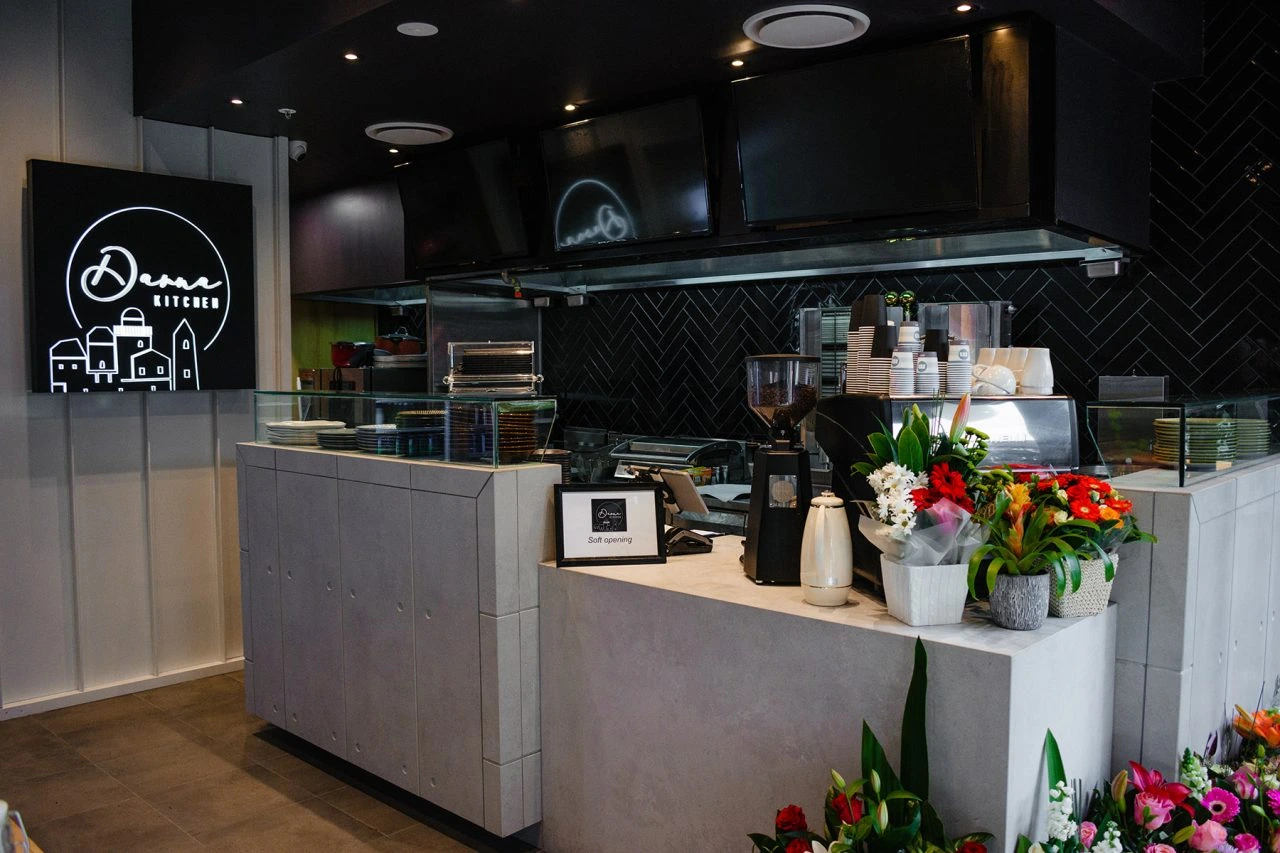
Opening a Restaurant in Sydney: A Fit-Out and Launch-Marketing Checklist
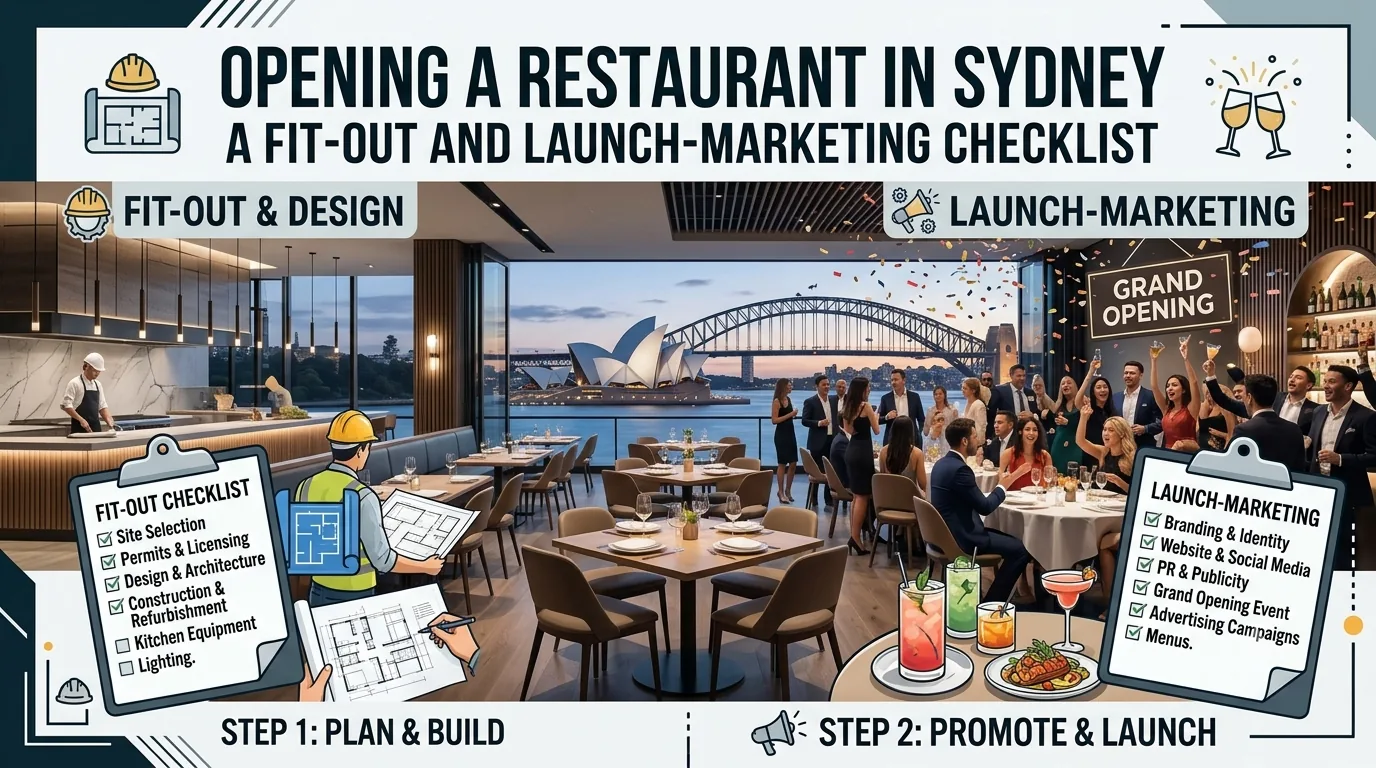
Sydney is one of the most competitive dining markets in Australia. A great menu will not save a venue that is badly laid out, slow to open, or invisible on launch day. The operators who succeed treat the fit-out and the launch marketing as one connected project, not two separate jobs handled months apart. This checklist walks you through both, in the order they actually happen.
1. Before you sign the lease
The most expensive fit-out mistakes are made before any building work begins. A site that looks perfect can hide grease-trap limitations, insufficient power, exhaust restrictions, or council conditions that quietly add tens of thousands to your budget.
- Check the existing services. Confirm the available electrical load, gas supply, water, drainage and exhaust capacity. A former retail shop is rarely wired for a commercial kitchen.
- Confirm the permitted use. Make sure the premises has development consent for food and drink, and check whether a change-of-use application is required.
- Understand the make-good clause. Know what you must return to the landlord at the end of the lease before you spend on custom joinery.
- Get a fit-out feasibility review early. A short assessment of the space against your concept can flag deal-breakers while you can still walk away.
2. Design and concept
Your fit-out is not just where you cook and serve. It is the first thing customers judge, the backdrop of every photo posted to social media, and a core part of your brand. Decisions made here directly affect how easily you can market the venue later.
- Match the design to your cuisine and story. A Greek taverna, a specialty café and a late-night bar each need a different spatial language. Working through a cuisine-specific restaurant fit-out keeps the interior consistent with the food and the brand.
- Plan the customer flow. Entry, ordering, seating, waiting and exit should feel effortless. Bottlenecks at the counter cost you covers on busy nights.
- Design a signature feature. An open kitchen, a striking bar, or a distinctive wall gives guests a reason to photograph and share the space — free reach on launch and beyond.
- Look at real examples. Reviewing completed hospitality projects is the fastest way to sharpen your own brief and set realistic expectations.
3. The kitchen and equipment
The kitchen is the engine of the business. Get the layout wrong and you inherit slow service, wasted labour and poor reviews for the life of the lease.
- Design the workflow, not just the room. A considered commercial kitchen design sequences prep, cook, plate and wash so staff move efficiently during a rush.
- Right-size the equipment. Specify appliances to your menu and projected covers — over-buying wastes capital, under-buying caps your revenue.
- Build in compliance from the start. Ventilation, food-safe surfaces, hand-wash stations and waste handling are far cheaper to design in than to retrofit.
4. Compliance and approvals in NSW
Approvals run on their own timeline, and they will hold up your opening if left late. Start them in parallel with design, not after.
- Development consent or a change-of-use application through your local council.
- Food business registration and notification with the NSW Food Authority and your council.
- A liquor licence through Liquor & Gaming NSW if you plan to serve alcohol — this one often takes the longest.
- Fire safety, accessibility and building certification for the completed fit-out.
- Signage and outdoor-dining approvals if you are using the footpath or an external shopfront sign.
If the approvals maze feels overwhelming, food and hospitality consulting can help you sequence the applications so nothing stalls the build.
5. The launch-marketing checklist
Marketing should begin while the fit-out is still underway, not on opening morning. The build itself is content — every stage generates something worth sharing, and it lets you gather an audience before you have a single table booked.
Pre-opening (start 8–12 weeks out)
- Lock in your brand identity — name, logo, colour palette and voice — so it can be applied consistently to the fit-out signage and every channel.
- Secure your Google Business Profile, Instagram, Facebook and TikTok handles early.
- Document the fit-out. Progress photos, the first equipment install and a "coming soon" reveal build anticipation and give you weeks of content.
- Prepare a build company profile — a polished overview of the venue, concept and team that you can send to media, partners, delivery platforms and potential investors.
- Photograph the finished space professionally before opening. These images will carry your website, socials and every listing.
Launch week
- Run a soft opening or friends-and-family night to test the kitchen, train staff and gather your first genuine reviews.
- Time a coordinated announcement across your website, socials and email list.
- Invite local food creators and press — a strong fit-out gives them something visual to feature.
- Turn on Google Business Profile posts and make sure your opening hours, menu and booking link are live everywhere.
Ongoing growth
- Encourage and respond to reviews on Google and social platforms.
- Keep publishing content built around your signature design feature — it keeps the venue recognisable.
- For paid search, local SEO and social campaigns that actually fill tables, a specialist marketing agency will get you further than doing it piecemeal between shifts.
6. A realistic timeline
Most Sydney restaurant openings run roughly 4 to 8 months from lease signing to first service, depending on the condition of the site and the complexity of approvals. Overlapping design, approvals, build and marketing is what compresses that window — and what stops your opening date from slipping.
Planning a Sydney venue?
Petra Projects designs and delivers commercial kitchens and hospitality fit-outs across Sydney and Melbourne, with more than 20 years of experience turning empty tenancies into working venues. Get in touch for a fit-out consultation and start your project on the right footing.
