Restaurant signage Sydney
Shopfront fascias, illuminated LED wall signage, menu boards and digital menu displays — designed, fabricated and installed by the same team that builds your fitout. One contractor from concept to switch-on, including council and landlord approvals.
Signage is the cheapest square metre in your fitout and the hardest working. It is the only part of the build that sells to people who have not walked in yet — and the only part that keeps selling after close, if it is lit. Get it wrong and you spend the next three years paying for foot traffic you should have captured for free.
Petra Group designs and builds restaurant, café and bar signage across Sydney as part of a full fitout, or as a standalone package for venues that are already trading. Because our design, joinery and fabrication teams sit in the same business, your signage is drawn at the same time as your shopfront and your counter — not bolted on by a third party after the joinery is already installed.
Types of restaurant signage
Most venues need three or four signage elements working together: something that identifies you from down the street, something that stops people at the door, and something that sells once they are inside. Here is the full range we design and manufacture.
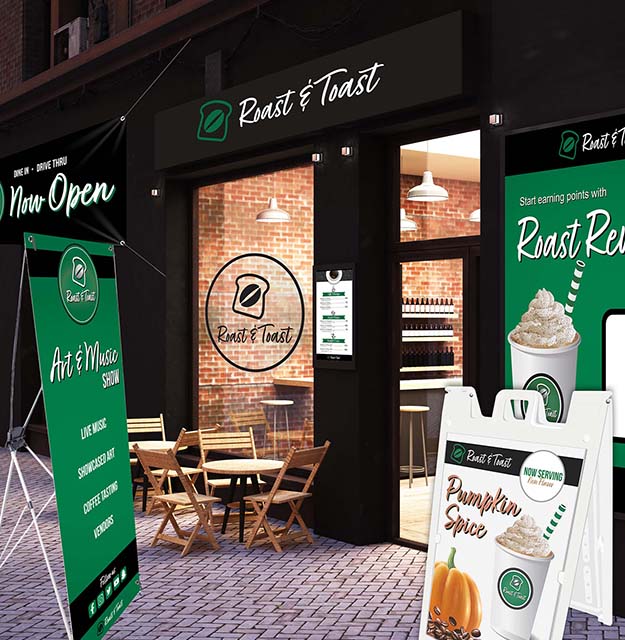
Illuminated and LED wall signage
Hospitality trades after dark. An unlit sign stops working around the time your dinner service starts, which is the trade you actually make money on. Illumination is the single highest-return upgrade in a signage package, and modern LED makes it cheap to run.
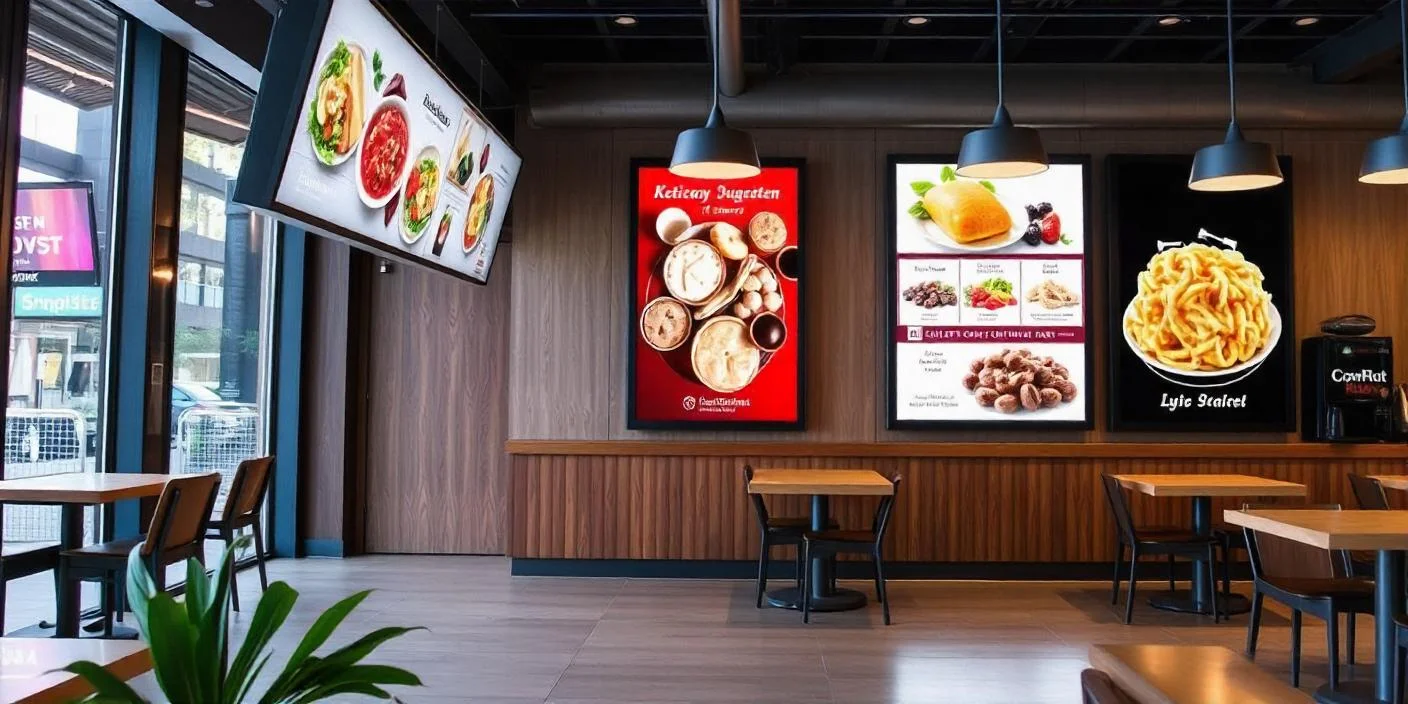
The four illumination methods, and when each is right
- Face-lit letters. Light exits through a translucent acrylic face. Brightest and most legible from distance — the right choice for a busy road or a deep setback.
- Halo-lit (reverse-lit) letters. Light washes the wall behind an opaque letter, creating a glow outline. Reads as the most premium option and photographs beautifully, but needs a clean wall surface behind it to work.
- Lightbox fascia. A fully illuminated panel with a printed or routed face. The most cost-effective way to light a wide fascia, and the easiest to reface later if you rebrand.
- LED neon flex. Flexible LED that mimics traditional neon without the gas, fragility or running cost. Ideal for interior feature walls, script logos and the wall people photograph.
Power and switching. Illuminated signage needs a dedicated circuit and a control method — timer, photocell or a switch behind the counter. Decide during the fitout electrical, because chasing a new circuit into a finished wall is expensive.
Ingress protection. External signage needs an IP rating suited to full weather exposure. Interior-grade componentry mounted outside is the most common cause of premature failure.
Brightness and dimming. A sign calibrated for daylight is uncomfortable at 10pm and can attract complaints where you have residential neighbours. Dimming or dual-level control solves it.
Menu boards and displays
The menu board is the highest-value piece of design in the venue. It is read by every customer, at the moment they decide what to spend, while they are standing still. Yet it is usually the last thing designed and the first thing improvised.
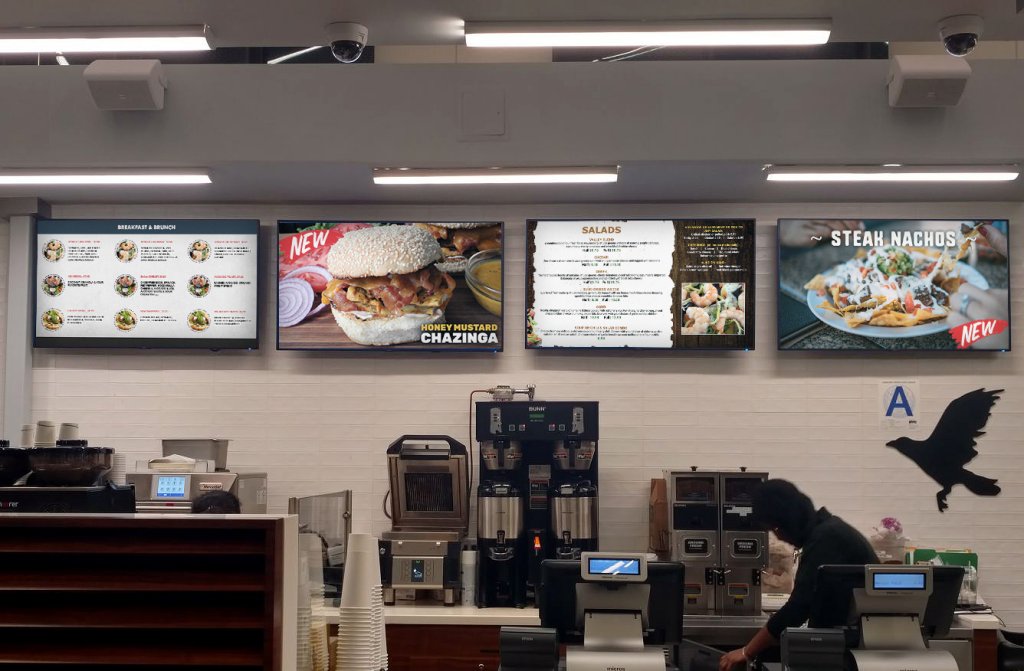
Board formats we build
- Backlit menu lightboxes. Translucent printed panels in an illuminated frame. Highest legibility, best in dim or evening venues, and panels can be swapped without touching the frame.
- Slide-in panel systems. Individual price strips or category panels that slide out, so one price change costs a strip rather than a whole board reprint.
- Rigid printed panels. Direct-printed or vinyl-applied panels on ACM, acrylic or timber. The most economical option for a settled menu.
- Chalk and hybrid boards. Framed chalk surfaces for daily specials, usually paired with a fixed board carrying the core menu so the handwriting stays a feature rather than the whole system.
Reading distance sets type size. Measure from the front of the queue to the board, not from behind the counter. A board designed at desk distance is unreadable where people actually stand.
Design for the price change. Every venue changes prices. A board that forces a full reprint quietly costs you hundreds a year and, worse, encourages you to leave stale prices up.
Glare and sightlines. A glossy board opposite a west-facing window is invisible for two hours every afternoon. Check it against the actual room, at the actual time.
Digital menu displays
Digital boards earn their cost in venues with changing menus, dayparting, or multiple locations. If your offer is stable and you have one site, a printed backlit board is usually the better commercial decision — we will tell you so.
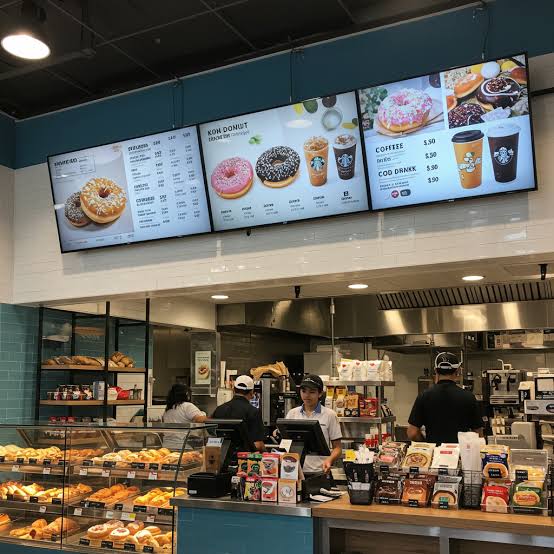
Where digital genuinely pays
- Dayparting. Breakfast switches to lunch switches to evening on a schedule, with no staff task and no panel swap.
- Volatile pricing or supply. Seasonal produce, market-price specials, sold-out items removed in seconds.
- Multi-site operators. Update every venue from one place, which also keeps branding consistent across sites.
- Motion where it helps. Subtle animation on a hero item lifts attention — though a menu board that never sits still is harder to read, not easier.
What we specify and install
Commercial-grade panels rated for extended daily operation rather than consumer televisions, portrait or landscape mounts recessed into joinery where the design allows, media players and content management, data and power roughed in during the fitout, and high-brightness panels where a screen faces a window. We coordinate the cabling with the electrical and joinery packages so nothing is surface-mounted as an afterthought.
Digital costs more up front, adds a content management task to someone's job, and fails visibly when it fails — a dark screen above your counter is worse than no screen. Printed backlit boards never crash. Choose digital because the menu genuinely changes, not because it looks modern in a render.
Signage approvals in Sydney
Signage sits in an awkward gap: too small to feel like a project, regulated enough to stop one. Some signage is exempt development and needs no application at all. Plenty is not.
| Consideration | What it means for your sign |
|---|---|
| Exempt development | Business identification signage within specified size, number and location limits can often be installed without council consent. Exceed a limit — area, projection, illumination or position — and you fall outside it. |
| Council consent | Larger signs, most new illuminated signage, pylon signs and anything on a prominent facade generally need approval. Councils assess against their own signage and advertising controls. |
| Heritage & conservation areas | The most restrictive category. Illumination, fixings into masonry and modern materials are all commonly limited or refused. Assume a longer path. |
| Landlord & owners corporation | Required in almost every case, and separate from council. Shopping centres and strata buildings typically have a design code dictating size, position, materials and sometimes illumination hours. |
| Footpath & projecting signage | Anything over public land — A-frames, blade signs, awning signage — involves council's road and footpath approvals as well as planning. |
| Electrical & structural | Illuminated signage must be installed and certified by a licensed electrician. Large or high-level signage may need engineering certification for wind loading and fixings. |
| Amenity | Where you back onto residential property, brightness, hours of illumination and light spill can all become conditions of consent. |
Petra Group prepares signage drawings, elevations and specifications for council and landlord submission as part of the package, and coordinates electrical certification on completion. If you want the full picture of how signage sits within the wider approval process, read our hospitality compliance and council approval guide.
How we deliver it
Indicative signage costs
Signage prices move with size, material, illumination method, height and access. The ranges below are indicative starting points for Sydney hospitality work, excluding council fees and GST.
| Signage item | Typical scope | Indicative from |
|---|---|---|
| Cut vinyl window graphics & frosting | Trading hours, logo, privacy bands | $350 |
| A-frame / footpath board | Powder-coated frame, printed inserts | $400 |
| Printed menu board panels | Set of rigid or slide-in panels | $650 |
| Awning or blade sign, non-illuminated | Fabricated panel, bracketed | $1,200 |
| LED neon flex feature sign | Interior wall, backing plate, transformer | $1,200 |
| 3D fabricated letters, non-illuminated | Acrylic or aluminium, stud-mounted | $1,500 |
| Council signage application coordination | Drawings, elevations, lodgement | $1,800 |
| Backlit menu lightbox | Frame, LED panel, printed faces | $1,900 |
| Digital menu display, per screen | Commercial panel, mount, player, setup | $2,200 |
| Illuminated lightbox fascia | Fabricated box, routed or printed face | $2,600 |
| Face-lit or halo-lit LED letters | Individual letters, wired and certified | $3,200 |
| Full shopfront signage package | Fascia, window, blade and interior | $7,500 |
Signage is also priced as a line item inside our café and restaurant fitout estimator, so you can see it in the context of the whole build rather than in isolation.
Common questions
Do I need council approval for restaurant signage in Sydney?
Sometimes. Business identification signage within specified size, number and location limits can often be installed as exempt development with no application. Larger signage, most new illuminated signage, signs on heritage buildings and anything projecting over public land generally require consent.
Landlord or owners corporation approval is a separate matter and is required in almost every case, including where council consent is not. We assess both at the site measure so you know the path before anything is fabricated.
How long does signage take from approval to installation?
Simple work like window graphics or printed menu panels typically runs one to two weeks from artwork sign-off. Fabricated and illuminated signage is usually three to five weeks in the workshop.
Where council consent is required, add the assessment period on top. That is why signage should be designed alongside your fitout, not after it — so the approval runs in parallel with construction instead of delaying your opening.
Should I choose printed menu boards or digital screens?
Printed backlit boards are usually the better commercial choice for a single venue with a stable menu. They are cheaper, never fail, and read cleanly.
Digital pays for itself where the menu genuinely changes — dayparting between breakfast, lunch and dinner, market-priced specials, frequent sold-out items, or several sites updated centrally. Choose it for the operational reason, not the aesthetic one.
Can you match signage to an existing brand or rebrand?
Yes. If you have brand guidelines and vector artwork, we work to them. If you do not, our in-house designers develop the mark and typography as part of the package, then carry it consistently across fascia, window, menu boards, interior features and merchandise.
Do you install signage for venues that are already trading?
Yes. Signage is available as a standalone package, not only as part of a fitout. We work after hours or before opening where the installation would interrupt service, and coordinate access equipment for high-level facades.
What maintenance does illuminated signage need?
LED signage is largely maintenance-free for years, but it is not maintenance-free forever. Expect periodic cleaning of faces, occasional driver or transformer replacement, and re-sealing of external penetrations over time.
The most common preventable failure is water ingress into a sign built with interior-grade componentry. Specifying the correct ingress protection at the outset costs very little and avoids the whole problem.
Signage is one part of the fitout
Shopfront, joinery, kitchen and signage designed together read as one venue. Explore the rest of what we build across Sydney and nationally.
Ready to be seen from the street? Send us a photo of your shopfront and your logo. We will come and measure, show you the sign on your actual building, and price it properly. Sydney shopfitters since 1988.
Prices shown are indicative starting points for Sydney hospitality signage, exclude GST, council and certifier fees, and do not constitute a quote. Approval requirements vary between local government areas and are subject to change — confirm the current position with your council and landlord. Petra Group, 5/62 Hume Hwy, Lansvale NSW 2166.