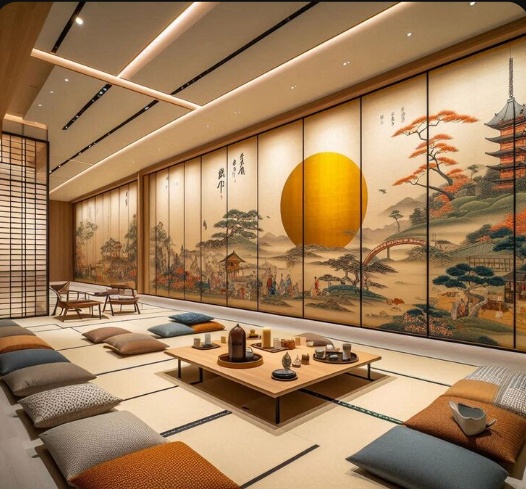
In the competitive Australian hospitality landscape, a Japanese restaurant is more than just a place to eat—it is a sanctuary of precision, tradition, and modern innovation. Whether you are launching a high-end Omakase spot in Sydney or a high-traffic Ramen bar in Melbourne, the Japanese restaurant fitout requires a delicate balance between “Zen” aesthetics and industrial-grade functionality.
At Petra Group, we specialise in merging the soulful simplicity of Japanese timber craft with the rigorous demands of a commercial kitchen. Here is how to master the art of Zen design.
1. The Zen Philosophy: Minimalism Meets Purpose
The core of Japanese design is Ma (negative space). In a restaurant context, this means avoiding clutter. Every element—from the lighting fixtures to the way the soy sauce sits on the table—should feel intentional.
-
Natural Timber Aesthetics: Use light woods like Oak, Ash, or Tasmanian Oak to emulate the traditional Hinoki feel.
-
Industrial Contrast: Balance the warmth of wood with the sleek, hygienic surfaces of industrial stainless steel—a staple for food safety and durability.
2. Integrating the “Sushi Train” (Kaiten-zushi)
The Sushi Train is the heartbeat of many modern Japanese eateries. Integrating this requires more than just a conveyor belt; it requires architectural planning.
Technical Considerations for Sushi Trains:
| Feature | Requirement | Why it Matters |
| Power Supply | Dedicated 15-20 Amp circuits | Ensures consistent belt speed without tripping. |
| Radius Curves | Minimum 600mm – 800mm | Prevents plates from “jamming” or falling off. |
| Cleaning Access | Removable panel inserts | Crucial for daily sanitisation and maintenance. |
3. Teppanyaki Mastery: Ventilation is Key
If your concept includes Teppanyaki, your biggest hurdle isn’t the cooking—it’s the smoke. Teppanyaki plate ventilation must be high-performance to ensure guests leave smelling like their perfume, not fried rice.
-
Down-draft Systems: Many modern fitouts prefer down-draft extraction to keep the “view” clear for diners.
-
High-Velocity Hoods: If using overhead extraction, the stainless steel canopy must be custom-contoured to the plate size to capture 100% of the grease-laden vapors.
4. The Material Palette: Timber vs. Steel
A successful Petra Group fitout often uses a “layered” approach:
-
Customer Zones (Warm): Use timber cladding, shoji-inspired screens, and soft ambient lighting.
-
Working Zones (Cold): High-grade stainless steel benches, easy-wipe splashbacks, and bright task lighting for chefs.
Pro Tip: Use LED strips hidden behind timber slats to create a “glow” effect that mimics traditional paper lanterns without the fire risk.
5. Maximising Operational Flow
Efficiency is the highest form of Zen. Your floor plan must allow for:
-
The Chef’s Stage: In Japanese culture, the chef is a performer. Ensure the counter height allows customers to see the knife work but hides the messy prep areas.
-
The “Wash-Down” Reality: Despite the delicate wood look, the floor behind the counter must be non-slip epoxy or high-grade tile with sufficient drainage.
Summary Checklist for Your Japanese Fitout
-
[ ] Choice of timber (Oak/Ash/Pine) selected.
-
[ ] Stainless steel grade (304 or 316) confirmed for kitchen.
-
[ ] Ventilation capacity calculated for Teppanyaki/Grills.
-
[ ] Sushi train dimensions integrated into floor plan.
-
[ ] Lighting zones (Ambient vs. Task) mapped out.
Frequently Asked Questions (FAQ)
How much does a Japanese restaurant fitout cost in Australia?
Costs vary significantly based on equipment (like sushi trains) and finishes. Generally, a bespoke Japanese fitout starts from $3,000 – $5,000 per square metre, depending on the level of custom joinery and technical kitchen requirements.
Do I need a special permit for Teppanyaki grills?
Yes, high-output grills require specific fire suppression systems and high-volume extraction that complies with Australian Standards (AS 1668.2). Petra Group can assist with these technical compliance checks.
Can I use real wood in a commercial kitchen?
While timber is great for dining areas, the Australian food safety standards (HACCP) require non-porous surfaces in food prep areas. We recommend using timber-look laminates or keeping natural timber strictly to the “Front of House” (FOH).
Need Help Bringing Your Zen Vision to Life?
Planning a Japanese dining space requires a partner who understands both the beauty of the design and the grit of the kitchen. Petra Group offers end-to-end solutions—from initial 3D design to the final installation of high-tech equipment.
